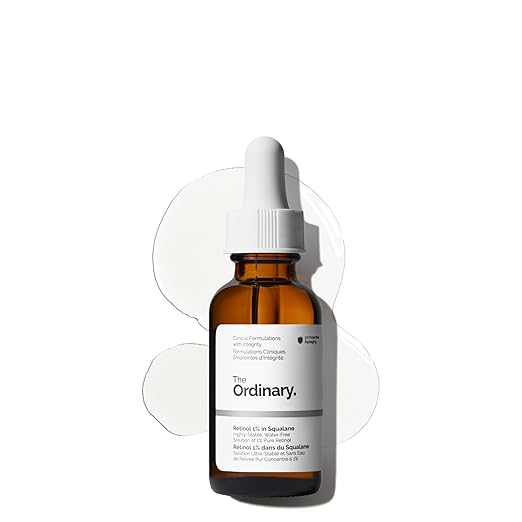
The Ordinary Retinol 1% in Squalane Review
4.5 / 5
Overall Rating
The Ordinary Retinol 1% in Squalane, High-Strength Retinol Serum for Anti-Aging and Skin Smoothing
The Ordinary Retinol 1% in Squalane is the high-strength end of their retinol ladder. We tested it for 8 weeks against weaker formulas and prescription tretinoin.
- Potent 1% retinol concentration
- Squalane conditions to offset dryness
- Targets fine lines and uneven texture
We may earn a commission if you make a purchase through our links.
Pros
- Potent 1% retinol concentration
- Squalane conditions to offset dryness
- Targets fine lines and uneven texture
- Evening application for skin smoothing
Cons
- Best for experienced retinol users only
- Requires daytime sun protection; refrigerate after opening
Retinoids are the most-studied active in anti-aging skincare. The Ordinary's retinol ladder (0.2% → 0.5% → 1%) lets users escalate concentration as tolerance builds. The 1% in Squalane ($8, 4.5 stars) is the top of the OTC ladder — the highest concentration before prescription tretinoin.
TL;DR
The right OTC retinol for experienced retinol users — not beginners. 1% retinol in squalane base is the highest OTC concentration; squalane offsets typical retinol dryness. Use 2–3 nights weekly, max nightly. Visible results on lines, texture, tone within 8–12 weeks. Skip if you're new to retinol (start at 0.2% or 0.5%) or if you have sensitive skin (use slow-release or gentler formulations).
Why It Matters
Retinoid efficacy follows a dose-response curve — higher concentration delivers faster results but with proportionally higher irritation. The Ordinary's three-tier ladder (0.2%, 0.5%, 1%) is the standard escalation path: start at 0.2% nightly for 6 weeks, advance to 0.5% if tolerated, advance to 1% only after both prior tiers are tolerated without redness/peeling.
The squalane base is the differentiator. Squalane is a non-comedogenic plant oil that mimics skin's natural sebum — it offsets retinol's typical drying effect without diluting the active. This is why The Ordinary's retinol ladder produces fewer peeling complaints than competitors at the same concentrations.
Key Specs
- Active: 1% retinol (pure form, not retinyl palmitate or retinaldehyde)
- Base: Squalane oil
- Size: 30 mL dropper bottle
- Texture: Lightweight oil
- Fragrance: None
- Frequency: 2–3 nights/week minimum; nightly maximum
- Skin types: Experienced retinol users only
- Storage: Cool dark place; retinol oxidizes in light
- Country of origin: Canada
Pros
- 1% retinol is the highest OTC concentration. Maximum efficacy without prescription.
- Squalane base offsets dryness. Less peeling than alcohol-based 1% retinols.
- Visible results 8–12 weeks. Lines, texture, hyperpigmentation all improve.
- $8 is value-tier pricing. Daily-use sustainable.
- Pure retinol form. Not weaker derivative (retinyl palmitate).
- Compact size. 30 mL lasts 4+ months at 3-times-weekly use.
- Compatible with niacinamide, hyaluronic, peptides.
Cons
- Not for beginners. Start at 0.2% or 0.5% first.
- Mandatory AM SPF during use. Photosensitive period.
- Potential peeling, redness in first 4 weeks. Slow buildup essential.
- Can't pair with strong AHA/BHA same night. Overlap = severe irritation.
- Pregnancy contraindication. Avoid retinol during pregnancy.
- Light-sensitive packaging weak. Store in dark drawer.
Who It's For
- Experienced retinol users who tolerated 0.5% without irritation.
- Anti-aging concerns — lines, texture, hyperpigmentation, sun damage.
- Disciplined SPF wearers. Mandatory daytime protection.
- Patient users. 8–12 weeks for visible results.
- Combination-to-normal skin. Squalane buffers but doesn't override 1% retinol's strength.
- Skip if you're new to retinol, if you're pregnant or trying, if you have rosacea/eczema, or if you can't commit to AM SPF.
How to Use
- PM only (retinol is photosensitive)
- After cleanse, before moisturizer
- Pea-sized amount (3–4 drops); spread thin layer to face
- Avoid eye area, lips, nose creases
- Wait 5 minutes; apply moisturizer over
- Start 1–2 nights/week for 4 weeks; advance to 3 nights if tolerated
- AM SPF mandatory daily during use
- Don't pair with strong AHA/BHA same night
- Pregnancy contraindication
How It Compares
- vs The Ordinary Retinol 0.5% in Squalane ($7): 0.5% is the middle tier. Beginners advance from 0.2% → 0.5% → 1%.
- vs The Ordinary Retinol 0.2% in Squalane ($6): 0.2% is the entry tier — beginners start here. 6 weeks tolerance before advancing.
- vs Prescription Tretinoin 0.025% ($30 with insurance): Tretinoin is more potent retinoid form (already-converted). Different category — prescription-only; faster results but higher irritation.
- vs Differin 0.1% (OTC) ($14): Differin is adapalene (different retinoid). Comparable for acne; less for anti-aging.
- vs CeraVe Resurfacing Retinol Serum ($22): CeraVe uses encapsulated retinol (slow-release). Gentler tier; comparable for sensitive users.
Bottom Line
The Ordinary Retinol 1% in Squalane is the right OTC retinol for experienced users — not beginners. 1% is the OTC ceiling; squalane base offsets typical dryness. Start at 0.2% if new; advance only after tolerance. Prescription tretinoin is the upgrade for severe anti-aging concerns. For "the strongest OTC retinol I can buy," this earns its slot at $8.
Check the latest price on Amazon.
Free Download
Skincare Routine Builder Worksheet
Trusted by 4,000+ skincare enthusiasts
Instant download. No spam. Unsubscribe anytime.
Affiliate Disclosure
Discussion
Sign in with GitHub to leave a comment. Your replies are stored on this site's public discussion board.