Retinol for Beginners: How to Start Without Ruining Your Skin
A safe, step-by-step guide to starting retinol in 2026: strength progression, purging vs breakout, buffering, and sun protection.
This post contains affiliate links. If you purchase through our links, we earn a small commission at no extra cost to you.
To start retinol in 2026 without irritation: begin with a low strength like The Ordinary Retinol 0.2%, apply a pea-size amount twice a week at night, buffer with moisturizer, and use sunscreen every day. Going slow is the entire secret. Here is the step-by-step.
Free: Skincare Routine Builder Worksheet
Trusted by 4,000+ skincare enthusiasts
Retinol is the most evidence-backed anti-aging ingredient available without a prescription. It works — but rushing it causes the redness, flaking, and peeling that make people quit. The right approach is patient and gradual.
What Retinol Actually Does
No spam. Unsubscribe anytime.
Retinol is a vitamin A derivative that speeds up cell turnover and stimulates collagen production. Over months, that means smoother texture, fewer fine lines, and more even tone. These are slow, cumulative changes — not overnight results.
Purging vs Breakout
Faster cell turnover can surface congestion already forming under the skin — that is purging, and it shows up in your usual breakout areas within the first few weeks, then settles. If you get new irritation in areas you never break out, that is a reaction, not purging — reduce frequency or strength.
The Step-Up Plan
- Patch test behind the ear or on the jaw for 2-3 nights.
- Weeks 1-4: The Ordinary Retinol 0.2%, twice a week at night.
- Weeks 5-10: If tolerated, move to every other night, or step up strength.
- Month 3+: Build toward The Ordinary Retinol 1% only if 0.2% is fully comfortable.
Never rush a step. Skin that tolerates retinol always beats skin that is irritated and on a break.
The Buffering Method
Apply moisturizer first, wait a minute, then apply retinol — or mix a drop of retinol into your moisturizer. Buffering reduces irritation while your skin builds tolerance, and it is the single best tip for sensitive skin. A barrier cream like First Aid Beauty Ultra Repair works well as the buffer layer.
Key Products
The Ordinary Retinol 0.2% — Best Starting Point
Low enough to introduce retinol safely, inexpensive enough to learn on.
Pros: Beginner strength; very affordable; squalane base is soothing. Cons: Slow results at this strength (by design).
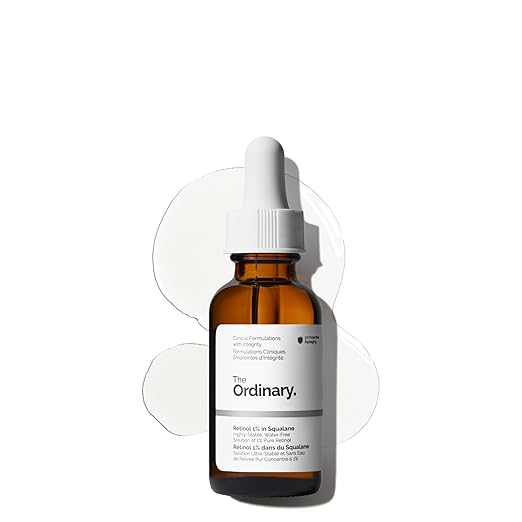
The Ordinary Retinol 1% — The Graduation Step
For skin that has fully adjusted and wants stronger results. Only after months at lower strengths.
Pros: Stronger results; still affordable. Cons: Too harsh as a starting point — do not begin here.
Gentle Alternative: Bakuchiol
If retinol is too irritating, INKEY List Bakuchiol Moisturizer is a plant-derived, lower-irritation alternative — good for very sensitive or pregnant users (check with a doctor).
Comparison Table
| Product | Strength | When to Use | Best For |
|---|---|---|---|
| The Ordinary Retinol 0.2% | Low | Start here | All beginners |
| The Ordinary Retinol 1% | High | Month 3+ | Adjusted skin |
| INKEY List Bakuchiol | Gentle | Anytime | Sensitive skin |
FAQ
How often should a beginner use retinol? Twice a week to start. Increase only when your skin shows no irritation for 2+ weeks.
Do I have to wear sunscreen with retinol? Yes, every day. Retinol increases sun sensitivity and UV exposure undoes its benefits.
Can I use retinol with exfoliating acids? Not the same night when starting out — alternate them to avoid over-irritation.
Bottom Line
Start with The Ordinary Retinol 0.2%, buffer with moisturizer, go twice a week, and only graduate to Retinol 1% after months. If retinol is too much, bakuchiol is a gentler path. Patience wins.
Affiliate Disclosure
Discussion
Sign in with GitHub to leave a comment. Your replies are stored on this site's public discussion board.