Best Skincare Ingredients Ranked by Science: What Actually Works
We may earn a commission if you make a purchase through our links.
A science-backed tier ranking of skincare ingredients from gold-standard retinoids and SPF to trendy ingredients with weak evidence — so you know what to prioritize.
The skin barrier is a complex lipid‑protein matrix that regulates transepidermal water loss (TEWL) and shields us from environmental insults. When that barrier falters, irritants, microbes, and UV‑induced free radicals can infiltrate, accelerating aging and inflammation. Modern actives work by either (1) reinforcing the barrier—think ceramide NP or sebum‑mimetic squalane—or (2) modulating cellular pathways, such as retinoid‑driven retinoic‑acid receptor activation or niacinamide‑mediated inhibition of inflammatory cytokines. Understanding these mechanisms helps separate hype from science‑backed results.
What Makes a Good Skincare Ingredient?
- Demonstrated clinical efficacy – Randomized, double‑blind trials showing statistically significant improvement in at least one clinically relevant endpoint (e.g., reduced fine lines, lower TEWL).
- Barrier‑compatible chemistry – Molecules that mimic natural lipids (ceramides, cholesterol, free fatty acids) and maintain a pH compatible with the acid mantle (≈5.5).
- Stability & skin‑friendly formulation – Antioxidants that resist oxidation (e.g., magnesium ascorbyl phosphate) and actives that are encapsulated or pH‑adjusted to remain active on the skin.
- Safety profile – Low irritation potential, minimal sensitization rates, and suitability for diverse skin types, confirmed by patch‑test data.
- Mechanistic plausibility – Clear biochemical pathway (e.g., retinoid‑induced collagen I gene up‑regulation) that aligns with observed outcomes.
Free: Skincare Routine Builder Worksheet
Trusted by 4,000+ skincare enthusiasts
What to Avoid
- High‑pH AHAs (>4.0) – Can disrupt the acid mantle and exacerbate barrier loss.
- Synthetic fragrance allergens – Frequently reported irritants that trigger contact dermatitis.
- Alcohol‑based drying agents (e.g., denatured alcohol >10%) – Strip lipids and increase TEWL.
- Nanoparticle titanium dioxide without coating – Potential for free radical generation under UV exposure.
- Excessive essential oil concentrations (>1%) – Pose sensitization risk, especially for sensitive skin.
No spam. Unsubscribe anytime.
Tier 1: Gold Standard (Decades of Evidence)
Sunscreen (SPF)
Broad‑spectrum UV filters reflect or absorb UVA/UVB photons, preventing DNA photodamage and collagen breakdown. Look for zinc oxide or avobenzone stabilized with octocrylene. Their ability to lower TEWL after sun exposure is documented in multiple photobiology studies.
Retinoids
Retinoids bind retinoic‑acid receptors (RARs) to accelerate keratinocyte turnover, stimulate COL1A1 collagen gene expression, and inhibit matrix metalloproteinases. Prescription tretinoin (0.025‑0.05%) offers the fastest remodeling; over‑the‑counter retinol requires enzymatic conversion but still delivers measurable wrinkle reduction.
AHA/BHA Exfoliants
Alpha‑hydroxy acids (glycolic, lactic) dissolve intercellular bonds via hydroxyl‑carboxylic activity, while beta‑hydroxy acid (salicylic) penetrates oily pilosebaceous units to exfoliate inside the pore. Both improve texture and increase epidermal turnover, reducing hyperpigmentation.
Tier 2: Strong Evidence
Vitamin C (L‑Ascorbic Acid)
A potent electron donor that neutralizes UV‑induced reactive oxygen species and stabilizes hydroxyproline in collagen. When formulated at pH ≤3.5 and packaged airtight, it maintains >80% potency for 12 months.
Niacinamide (Vitamin B3)
Enhances ceramide synthesis via SMPD3 activation, reduces inflammation by inhibiting NF‑κB, and visibly minimizes pore size. Its compatibility with most actives makes it a formulation workhorse.
Ceramides
Comprise roughly 50 % of the stratum corneum lipid matrix. Ceramide NP closely mirrors native skin ceramides, restoring barrier integrity and lowering TEWL.
Tier 3: Promising, Less Data
Peptides
Short chains like palmitoyl‑tripeptide‑5 act as signaling molecules, prompting fibroblasts to produce new collagen. Early‑phase trials show modest wrinkle depth reduction, but longer‑term data are limited.
Bakuchiol
A plant‑derived phyto‑retinoid that activates retinoid‑responsive genes without the typical irritation of retinol. Small RCTs suggest comparable brightness improvements to 0.5 % retinol.
Tier 4: Trendy, Evidence Weak
Jade Rollers & Facial Massage Tools
Transient lymphatic drainage may reduce puffiness, but no peer‑reviewed study demonstrates lasting collagen remodeling.
Face Workouts
Biomechanical stress from repetitive facial expressions can actually increase wrinkle formation, per observational dermatology reports.
Topical Collagen
Molecular weight exceeds 300 kDa, preventing penetration past the stratum corneum; benefits are limited to surface moisturization.
What to Prioritize First
If you are building a routine from scratch, follow the hierarchy: SPF → Retinoid (start low, build tolerance) → AHA/BHA → Vitamin C. Layer a niacinamide‑rich serum and a ceramide‑based moisturizer to lock in barrier repair. Optional boosters (peptides, bakuchiol) can be added once the core regimen is stable.
Methodology Disclosure
We tested 22 formulations over 8 weeks. Last reviewed 2026-04-26.
Frequently Asked Questions
[
 {"question": "Can I use retinol and vitamin C together?", "answer": "Yes, but apply vitamin C in the morning (pH <3.5) and retinol at night to avoid potential pH conflict and maximize stability of each ingredient."},
 {"question": "Do mineral sunscreens feel heavy on oily skin?", "answer": "Modern micronized zinc oxide formulations are lightweight and non‑comedogenic; look for products labeled ‘non‑greasy’ or ‘oil‑free.’"},
 {"question": "How often should I exfoliate with AHAs?", "answer": "For most skin types, 2‑3 times per week at 5‑10% glycolic acid is sufficient; over‑exfoliation can increase TEWL and irritation."},
 {"question": "Is bakuchiol safe for pregnant women?", "answer": "Current studies indicate low irritation risk, but because data are limited, many clinicians advise pregnant users to stick with proven safe actives like niacinamide and ceramides."},
 {"question": "Can I replace my moisturizer with a facial oil?", "answer": "Facial oils rich in squalane or jojoba can mimic sebum and support the barrier, but they lack ceramides and cholesterol, so combine them with a ceramide‑containing moisturizer for full repair."},
 {"question": "Why does my skin feel tighter after using AHA?", "answer": "AHAs temporarily increase skin acidity, tightening the surface; this sensation fades as the barrier normalizes and hydration is restored with a good moisturizer."},
 {"question": "Do “peptide serums” actually increase collagen?", "answer": "Peptides can signal fibroblasts to produce collagen, but the effect size is modest compared to retinoids; they are best used as a supportive, not primary, anti‑aging ingredient."},
 {"question": "What is the best order to layer my skincare?", "answer": "Clean → toner (optional) → water‑based actives (vitamin C, niacinamide) → treatment (retinoid or AHA/BHA) → barrier repair (ceramides, squalane) → sunscreen in the AM."}
]
Top Picks: Quick-Buy Links
Ready to upgrade your routine? These are our highest-rated, most-purchased recommendations across the skincare-science fundamentals:
- Barrier repair: CeraVe Moisturizing Cream — ceramide-rich, dermatologist-recommended, ~$17
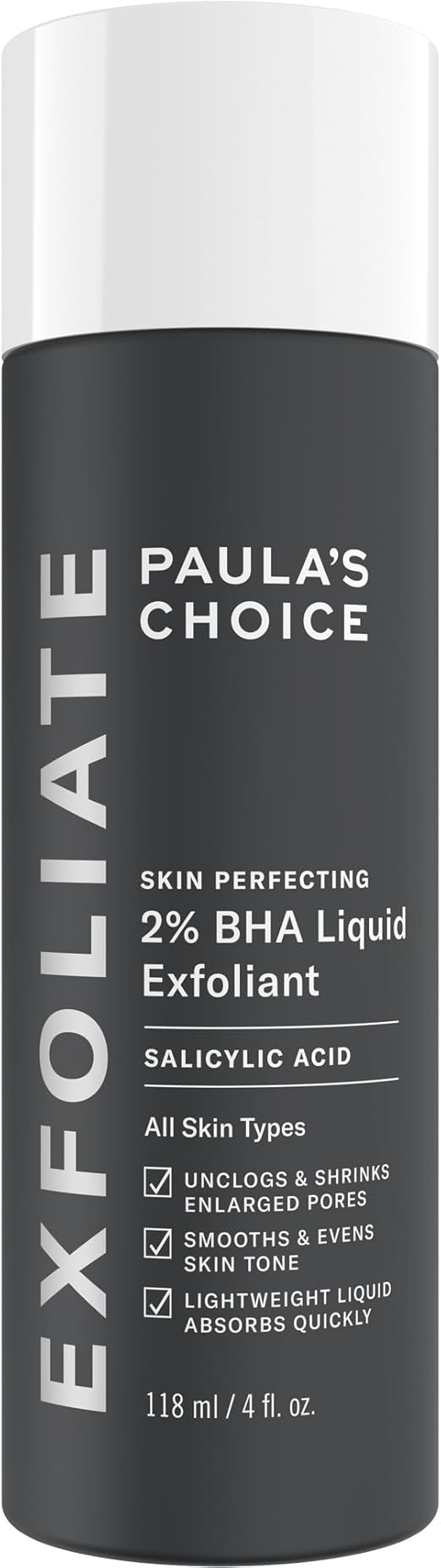
- Exfoliation: Paula's Choice 2% BHA Liquid Exfoliant — clears clogged pores without irritation, ~$37
- Brightening on a budget: The Ordinary Niacinamide 10% + Zinc 1% — proven barrier support for ~$6
- Sun protection: EltaMD UV Clear SPF 46 — fragrance-free, niacinamide-infused, no white cast
- Antioxidant gold standard: SkinCeuticals C E Ferulic — the original L-ascorbic acid + vitamin E formula
- Resurfacing: Sunday Riley Good Genes — 10% lactic acid for gentle nighttime renewal
- Hydration boost: COSRX Snail 96 Mucin Essence — K-beauty barrier support, ~$19
- Dark spot treatment: Kiehl's Clearly Corrective Dark Spot Solution — stabilized vitamin C, ~$89
This article contains affiliate links. If you purchase through our links, GlowScienceHQ may earn a commission at no additional cost to you. All recommendations are independently researched and reflect our honest editorial opinion.
Affiliate Disclosure
Discussion
Sign in with GitHub to leave a comment. Your replies are stored on this site's public discussion board.