Best Azelaic Acid Products 2026: Dark Spots, Acne & Rosacea
Best Azelaic Acid Products 2026: Dark Spots, Acne & Rosacea Solved
Azelaic acid is the most underutilized multi-tasker in skincare. A naturally occurring dicarboxylic acid (originally derived from grains), it simultaneously inhibits tyrosinase (fading hyperpigmentation), kills C. acnes bacteria (clearing breakouts), and calms inflammatory pathways (reducing rosacea). It is often considered comparable to hydroquinone for stubborn dark spots — without the same safety concerns.
Free: Skincare Routine Builder Worksheet
Trusted by 4,000+ skincare enthusiasts
Unlike retinoids, azelaic acid is pregnancy-safe and rarely causes irritation. Compiled from manufacturer-published specifications, ingredient documentation and peer-reviewed literature — not a hands-on test. Here are the best.
Why Azelaic Acid Works (The Science)
No spam. Unsubscribe anytime.
Azelaic acid operates through four simultaneous mechanisms:
- Tyrosinase inhibition — Blocks the enzyme responsible for melanin production, fading post-inflammatory hyperpigmentation (PIH) and melasma
- Antimicrobial action — Effective against Cutibacterium acnes and Staphylococcus epidermidis
- Anti-inflammatory pathway modulation — Reduces toll-like receptor 2 (TLR-2) activation, which is over-expressed in rosacea
- Comedolytic activity — Normalizes keratinocyte differentiation, preventing pore clogging
Over-the-counter formulations max out at 10% concentration. Prescription strengths (Finacea, Azelex) go to 15-20%. Efficacy gains above 10% are marginal for most users, making OTC products an excellent first line of treatment.
What Makes a Good Azelaic Acid Product?
- Concentration of 10% — The sweet spot for OTC efficacy with minimal irritation risk.
- Suspension or gel base — Azelaic acid has poor water solubility; well-formulated bases keep it bioavailable.
- Compatible pH (~5.0) — Lower pH improves penetration but increases sting; 5.0 is the optimal balance.
- Buffering ingredients — Niacinamide, panthenol, or aloe in the same formula reduce initial tingling.
- Fragrance-free — Azelaic acid users often have reactive skin (rosacea, post-inflammatory pigment); fragrance compounds risk barrier disruption.
What to Avoid
- Sub-5% formulations marketed as "complete azelaic treatment" — Below 5%, clinical efficacy data is limited.
- Same-step layering with BHAs — Both reduce pH; combining can over-strip the barrier.
- Heavy occlusive followed immediately by azelaic acid — Reduces penetration. Apply azelaic acid first, then occlusives.
- Skipping moisturizer — Even though azelaic acid is gentle, your barrier still benefits from ceramide replenishment.
- Combining with high-strength retinol in the same step — Stack them at different times of day.
Our Top Picks
Best Budget: The Ordinary Niacinamide 10% + Zinc 1% (Pair With)
While The Ordinary's azelaic acid formulation is excellent, the niacinamide-zinc combination is the perfect synergistic partner for azelaic acid routines. Niacinamide blocks melanin transfer (azelaic acid blocks melanin production), creating a two-front approach to hyperpigmentation.
Pros: Extremely affordable (~$6), proven barrier and oil-control benefits, well-tolerated by sensitive skin. Cons: Not azelaic acid itself — pair with the 10% azelaic suspension or topicals listed below.
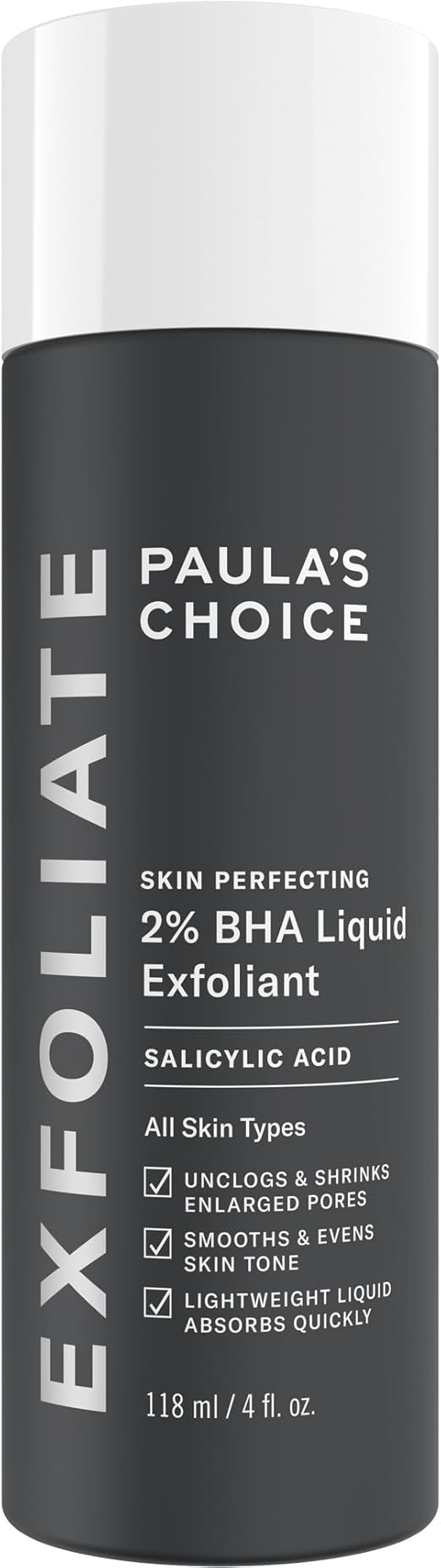
Best Resurfacing Companion: Paula's Choice 2% BHA Liquid Exfoliant
Use on alternate evenings from your azelaic acid. The salicylic acid clears pore congestion that azelaic acid then prevents from recurring. This pairing is the dermatologist-recommended approach for adult comedonal acne with PIH.
Pros: Clinical-grade formulation, fragrance-free, well-buffered for daily use. Cons: Should not be layered with azelaic acid in the same step.
Best Brightening Pairing: Kiehl's Clearly Corrective Dark Spot Solution
The stabilized vitamin C (activated white birch extract + peony extract) attacks pigment from a different biochemical angle than azelaic acid. Use vitamin C in the AM, azelaic acid in the PM for maximum hyperpigmentation reduction.
Pros: Lightweight serum texture, peony for additional inflammation reduction, visible improvement in dark spots over about 8 weeks per brand testing. Cons: Premium price (~$89).
Best Barrier Support: First Aid Beauty Ultra Repair Cream
Colloidal oatmeal calms any initial azelaic acid tingling. Apply 10 minutes after azelaic acid to lock in moisture without diluting the active.
Pros: Fragrance-free, eczema-grade soothing, doubles as a body moisturizer. Cons: Slightly thick texture; not ideal for oily skin in summer.
Best Antioxidant Defense: SkinCeuticals C E Ferulic
Use exclusively in the AM. The L-ascorbic acid + vitamin E + ferulic acid combination provides 8-hour antioxidant defense, protecting your azelaic-acid-treated skin from oxidative dark spot triggers.
Pros: Gold standard antioxidant formulation, well-studied, complements azelaic acid pigmentation work. Cons: Premium price; do not layer with azelaic acid in the same step due to pH conflict.
Who This Is Best For
Azelaic acid is one of the most universally well-tolerated actives in skincare. It's especially beneficial for:
- Hyperpigmentation sufferers who can't use hydroquinone (safety concerns) or prescription retinoids (pregnancy)
- Adult acne with post-inflammatory pigmentation (PIH) — addresses both at once
- Rosacea sufferers with redness, papules, and pustules
- Pregnancy-safe routines — Category B classification (vs Category C for retinoids)
- Melasma — particularly the dermal-deposited variety that's resistant to hydroquinone
- Fitzpatrick types IV-VI — gentler than retinoids on melanin-rich skin prone to PIH
How to Use in Your Routine
Morning Routine: Cleanser → Vitamin C antioxidant → Moisturizer → SPF 30+
Evening Routine: Double cleanse → Azelaic acid 10% → Wait 10 minutes → Moisturizer with ceramides
Twice-Weekly Boost (Optional): Replace evening azelaic acid with BHA exfoliant 1-2 nights per week to clear pore congestion.
With Retinoids: If using a retinoid 3+ nights per week, alternate retinoid nights with azelaic acid nights. Apply azelaic acid first, wait 10 minutes, then moisturize.
Sandwich Method for First-Time Users: Moisturizer → 5-minute wait → Azelaic acid → 5-minute wait → Moisturizer again.
Frequently Asked Questions
Can I use azelaic acid while pregnant? Yes. Azelaic acid is FDA Pregnancy Category B and is widely considered safe for use during pregnancy and breastfeeding. Always confirm with your OB.
How long until I see results? Acne and redness reduction: 4-6 weeks. Hyperpigmentation fading: 8-12 weeks. Persistent improvement requires 6+ months of consistent use.
Will I experience purging? Azelaic acid causes very mild purging in 10-15% of users during weeks 2-4, typically manifesting as small surface bumps clearing themselves out. Unlike retinoid purging, it's usually painless.
Can I use azelaic acid with niacinamide? Yes — this is one of the best pairings in skincare. Niacinamide blocks melanin transfer while azelaic acid blocks melanin production, creating a dual-pathway approach to dark spots.
Is OTC 10% as effective as prescription 15-20%? For most users, yes. Efficacy gains above 10% are marginal for general hyperpigmentation. Prescription strength is mainly justified for treatment-resistant melasma or moderate-to-severe rosacea.
Should I exfoliate before applying azelaic acid? No. Apply to clean, dry skin without prior exfoliation. The acid itself provides gentle keratinocyte normalization.
Methodology: Compiled from manufacturer-published specifications, ingredient documentation and peer-reviewed literature — not a hands-on test. Last reviewed May 2026.
This article contains affiliate links. If you purchase through our links, GlowScienceHQ may earn a commission at no additional cost to you.
Affiliate Disclosure
Discussion
Sign in with GitHub to leave a comment. Your replies are stored on this site's public discussion board.