The Dermatology-Literate Skincare Gift Guide for 2026
A recipient-by-recipient skincare gift guide with dermatologist-style reasoning: barrier and hydration products are safe gifts, actives are personal decisions, and luxury creams are an experience worth being honest about.
This article contains affiliate links — if you buy through them, we may earn a commission at no extra cost to you.
Skincare is one of the most-gifted categories of the holiday season, and one of the easiest to get wrong. The instinct is to reach for whatever sounds most potent — a famous retinol, a cult acid — when those are precisely the products you should never pick out for another person. Skincare gifting is a compatibility problem: you're buying for a face you don't live in, a routine you haven't seen, and a tolerance you can't predict.
Free: Skincare Routine Builder Worksheet
Trusted by 4,000+ skincare enthusiasts
The fix is to think like a dermatologist instead of a marketer. Below is a recipient-by-recipient guide built on one organizing principle — gift hydration and experience freely, gift actives only with inside knowledge — along with the ingredient-level reasoning behind every pick. Prices are described in bands (drugstore, mid-range, luxury) because sale season moves numbers around; the reasoning doesn't change.
First, the rule: don't gift a routine change
No spam. Unsubscribe anytime.
Retinoids, exfoliating acids, benzoyl peroxide, high-strength vitamin C — dermatology treats these as commitment products. They require gradual introduction, they interact with whatever the recipient already uses, and their irritation potential varies enormously with skin type and barrier condition. Gift a retinol to someone who already uses a prescription retinoid and it's redundant; gift one to someone who has never used any and you've handed them homework — possibly flaky, stinging homework they didn't sign up for over the holidays.
Barrier-support and hydration products are the opposite case. Gentle cleansers, ceramide moisturizers, humectant serums, and occlusive balms are compatible with nearly any routine, need no adjustment period, and carry minimal irritation risk for most people. They're also the category dermatology cares most about, because a functioning skin barrier — corneocytes held together by a mortar of ceramides, cholesterol, and fatty acids — is the foundation every other product depends on.
So the operating rule for every recipient below: hydration is a gift; exfoliation is a personal decision. The single exception is flagged where it appears.
For the beginner: barrier basics that never miss
The picks: CeraVe Hydrating Facial Cleanser + CeraVe Moisturizing Cream (drugstore)
If the recipient is new to skincare — a teenager, a partner who washes with bar soap, a parent who "doesn't do products" — the best gift teaches the correct first lesson: cleanse without stripping, then put lipids back.
CeraVe's Hydrating Facial Cleanser is a non-foaming, fragrance-free formula designed to remove grime without dismantling the barrier's own lipids, and it carries the brand's signature trio of skin-identical ceramides. The Moisturizing Cream pairs those ceramides with cholesterol and fatty acids — the same three lipid classes that make up the stratum corneum's mortar — delivered through a slow-release MVE system so hydration is metered out over hours rather than dumped at once.
Wrapped together, the pair makes a genuinely useful starter barrier kit for less than the price of one prestige moisturizer: unglamorous, dermatologist-developed, and essentially impossible to misuse.
For the K-beauty curious
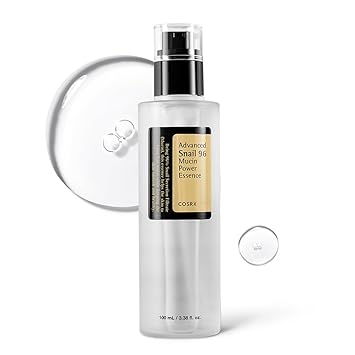
The picks: COSRX Advanced Snail 96 Mucin Power Essence, Anua Niacinamide 10% + TXA 4% Serum, Beauty of Joseon Glow Serum (all budget-friendly)
K-beauty's real contribution to skincare isn't a single miracle ingredient — it's a hydration-first layering philosophy and textures pleasant enough that people actually keep the routine. That makes it ideal gifting territory: low irritation risk, high sensory payoff.
COSRX's essence is 96 percent snail secretion filtrate — largely glycoproteins, glycosaminoglycans, and hyaluronic acid that together behave as a water-binding, lightly filming humectant layer. The clinical evidence base is thinner than the internet implies, but as a bouncy, distinctive hydrating step it delivers, and it remains the K-beauty product people are most curious to try.
Anua's serum pairs niacinamide — a vitamin B3 derivative studied for supporting the skin's own barrier-lipid production and for evening the look of tone — with tranexamic acid, an ingredient increasingly studied for improving the appearance of dark spots. It's the most "active" pick in this section, but both ingredients sit at the gentle, well-tolerated end of the spectrum.
Beauty of Joseon's Glow Serum leans on propolis, a soothing humectant with antioxidant properties, plus a modest dose of niacinamide. All three products together often cost less than one department-store cream — a generous-feeling bundle with almost no compatibility risk.
For the anti-aging investor
The picks: SkinCeuticals C E Ferulic (luxury-priced), Olay Regenerist Micro-Sculpting Serum (drugstore), Drunk Elephant T.L.C. Sukari Babyfacial (mid-range, with a caveat)
For the person who reads ingredient lists and wants results, antioxidant vitamin C is the most gift-safe "serious" category: daytime use, low irritation for most, and no adjustment period.
SkinCeuticals C E Ferulic is the reference formula — 15 percent L-ascorbic acid stabilized with vitamin E and ferulic acid at low pH, built on published antioxidant-synergy research out of Duke University showing the combination protects better than ascorbic acid alone. It is genuinely luxury-priced, and it's one of the few prestige products where the price maps to a defensible formulation argument rather than a heavy jar.
If the budget says otherwise, Olay's Regenerist Micro-Sculpting Serum is the honest value counterpoint: niacinamide, amino-peptides, and hyaluronic acid from a company that publishes real formulation science, at a drugstore price. Frame it accurately — these aren't equivalents. One is the gold standard, the other is the smart-money pick, and both are legitimate choices.
Babyfacial — a weekly 25 percent AHA / 2 percent BHA mask — is this guide's one exception to the no-actives rule. Gift it only to someone who already loves chemical exfoliation and has said so out loud; for that person it's more of what they love. For anyone else, it's a chemical peel from a well-meaning stranger.
For the luxury moment
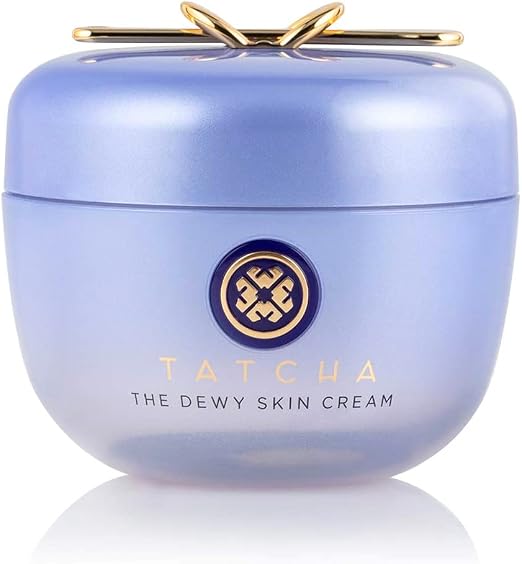
The picks: La Mer Moisturizing Soft Cream, Tatcha The Dewy Skin Cream (luxury)
Honesty first: there is no independent published evidence that either of these outperforms a well-formulated drugstore ceramide cream on hydration or barrier measures. La Mer is built around Miracle Broth, a fermented kelp extract, in a classically rich emulsion. Tatcha's Dewy Skin Cream runs on Japanese purple rice, algae, and a substantial dose of ordinary glycerin doing quiet, effective work.
What you're actually buying is texture, scent, weight, and ritual — and for gifting, that isn't a flaw. A gift is allowed to be an experience rather than a treatment. The person who would never spend this on themselves but will feel wonderful using it every night is real, and buying that experience for them is the entire point. Buy it as luxury, not as medicine, and it's a great gift.
For the tools person
The picks: Revlon One-Step Hair Dryer Brush (affordable), a red light LED face mask (mid-range)
The Revlon One-Step isn't skincare, but it's the rare viral beauty tool with years of sustained user satisfaction behind it — low risk, high delight, and useful the morning it's unwrapped.
LED masks need evidence-honest framing. Red and near-infrared wavelengths (roughly 630–850 nm) have randomized-trial support for modest improvements in fine lines and collagen measures — with consistent use over months, at the limited power levels home devices deliver. The "7-color" marketing is mostly noise: red carries most of the skin-aging evidence and blue has data for blemish-prone skin; the remaining colors are ambience. Gift one to the gadget lover who will genuinely wear it ten minutes a day, and set expectations at "subtle and cumulative," never "overnight."
The cheat sheet
- Safest categories: gentle cleansers, ceramide moisturizers, hydrating essences and serums, luxury creams, tools.
- Gift only with inside knowledge: retinoids, strong acids, potent actives — someone's routine is a decision they've already made.
- Best science-per-dollar: well-formulated vitamin C and niacinamide.
- Luxury: buy it for the ritual, and say so on the card.
Give hydration, give experience, give the thing they'd never buy for themselves — and let their own routine (or their dermatologist) handle the rest.
Affiliate Disclosure
Discussion
Sign in with GitHub to leave a comment. Your replies are stored on this site's public discussion board.